Tuesday, 3 November 2015

The Ledingham's Experience - Preparation is Key.

I had intended to write this report shortly after returning from the trip, but life interfered and it is only now, a month later, that I've found the desire to put pen to paper again. Sorry. 

Preparation


Ledingham's Depot is a fuel dump and geographical survey shelter located 150km west of Mawson Station. The site is no longer active, but most years the crew at Mawson make an effort to get out there and check on the facilities (er, "facilities". You'll see.).

Back in the real world 150km isn't that big a deal. Two hours on a highway, sure why not. 

It's a little more complicated down here...
  • Six expeditioners
  • Two Hagglunds
  • Five days
  • 700L of Aviation Turbine Kerosene (Hagg food)
  • Four tubs of supplies (people food)
  • 180L drinking water
  • Two camp-stoves and 10L of fuel
  • Two polar pyramid tents
  • Four tubs of 24 man/meal ration packs for emergency use
  • Two satellite phones
  • Various other tools and equipment
Our preparations started in July, and ran through until mid-September. We participated in a first aid refresher, comms refresher (sat phones and HF radio), practiced pitching our tents and organising the five layers of sleeping equipment that we might have to use. 

But the biggest trick down here simply staying warm, or staying safe. It's finding a bloody weather window that is suits the work requirement. The Bureau of Meteorology started forecasting for our trip on the 8th of September. It wasn't until the 21st that were able to expect two consecutive days of reasonable weather. I mean, all we're looking for is two days without gale-force winds... Mawson is a bastard.

To reiterate for emphasis, for a period of two weeks we did not have two days in a row with winds averaging less than 70km/hr. This is the usual weather in my home. Blargh.

But it was the worth the wait - Team Met pulled through with typical proficiency and produced five days of glorious weather for our adventures.

For your gratification, here is a list of my own personal equipment that I took for the trip:


  • Canada goose outer jacket (pockets contain a head torch, hand-held GPS, hand-held VHF radio, spare batteries, sun-glasses, neck gaiter, balaclava, woolen inner gloves)
  • Beannie
  • Insulation jumper layer 1
  • Insulation jumper layer 2
  • 4x pairs of thermals
  • 8x pairs of wool socks (my feet get cold :( and I need dry pairs)
  • Enormous winter Sorrel boots
  • Lighter summer Baffin boots
  • My normal gloves, new gloves, spare gloves, even more gloves (cold hands are the worst)
  • Carrhart bib'n'brace
  • Goggles
  • Camera, GoPro, spare batteries, chargers, polarising filter
  • Full survival pack (outlined elsewhere)
  • Personal food
  • Emergency clothing spares
  • Spare boot-liners
  • A book :)
  • Micro-spikes, ice axe
  • ... I'm sure there are over things I've forgotten. I may amend this list as it becomes necessary.
I'm expecting to be throwing up each day of the trip as a new post, so stay tuned for more.

With love from Mawson,
EddieDoesIce


Thursday, 11 June 2015

A Béchervaise Break

Article featured in "This Week at Mawson - 12/06/15"

Whether at home or down south, it's nice to take a weekend break away from work and the commitments of day to day life. Last weekend we took a recreational trip to Béchervaise Island (locally Béche, pronounced Baesh) to wind down and chill out. Béche research facility is about three kilometres from station, and is accessed over the sea ice through winter, and by boat or helicopter through summer. Once summer rolls around the Adelie penguins start returning to breed, and where the penguins lead the boffins follow, but until then we get the facility to use as our own little holiday home.

Accommodation on the island comes in the form of a melon and an apple. There is also a storage shed and another melon which the boffins use as their laboratory. The melons don't look particularly expansive from the outside, but inside they feel quite roomy, and are easier to get around inside of than our usual shipping container huts. The living quarters has a well stocked kitchenette for the scientists return, three beds and a large table. The apple is substantially smaller, and from what I saw was mostly full of jerry cans for water storage.

After arriving on site we completed the usual ritual of unpacking all our kit, setting up the hut, and stowing the Hägglunds, our big tracked over-snow vehicle. All but one of our party - he stayed behind to have stern words with a recalcitrant door handle - went for a short walk to the peak of the island for a look at the view and some snaps of a horizon that was burning with sunset, but the wind was quite unpleasant at this point so we didn't stay long at the top.


Back inside again, we settled down for a novelty card game (Munchkin, a RPG for those in the know) that I, facilitated by my 'Really Impressive Title', dominated in short order. After the game, I noticed that there was no more wind noise outside so I elected to go out and play with some long exposure shots of the melon while the others prepared dinner. The air was dead still and probably around -15°C so it was pretty pleasant outside, and when I came inside the results of my labours prompted the other guys to have a go themselves. Robbie lost track of time and was out until 2300 fiddling with his camera!

After a good hut sleep-in (BYO ear plugs) we had a late breakfast and then set about shutting down the huts. We took off onto the ice, travelling the scenic route to get back to station where I had just enough time to rectify the hydroponics disasters that occurred during my absence before getting down to balloon launch time.

Holidays are never long enough, are they?


Monday, 11 May 2015

"A Tragic Day for Eddie" and "Sometimes it is Windy"

The Tragedy
I put a lot of time and love into these posts. Sure, the layout is godawful, and I would accept that the design leaves a lot to be desired. Even the glorious photo's I include only take a moment to capture and upload if I'm not being too picky. But the words. Every single word I write is a promise to the reader, to be the best, most evocative word it can be. I agonize over every sentence. Read and re-read again and again to tell my story in the most entertaining manner possible.

Which is why I was particularly saddened this fine Saturday morning to discover that my latest endeavor; a thousand words of nail-biting, seat-edging, beauteous prose dedicated to my recent blizzard-bound mission for frozen potato ovals (the "hash brown incident"); has disappeared from the face of the Internet.

It appalls and offends me that I have fallen into this situation - I am of the generation and professional-ilk that "Ctrl+S" is less of a habit and more of a compulsive tic. Spend enough time programming or documenting and you will wake up with your left hand twitching to the beat of the damnable save shortcut. Alas, each little convenience that the modern Internets adds takes away from your own control and responsibility. And given that I am writing these articles in a web browser, straight to a remote server, and that our satellite connection would be classed as "bloody slow" at the best of times, I really should have checked that me hitting save was sending my precious words.... somewhere. Anywhere. Instead, somewhere out in the nether, the damned hash brown incident got lost. So you will never hear about the time I braved the elements (and fell over (a lot)) just so the station could have crunchy-carb-cakes with breakfast...

... I guess it's not all bad.


Back on topic - Sometimes it is Windy
The base cause of my being on this magnificent continent is to look at the weather. The weather is not why I personally wanted to come, it isn't even what I do with the majority of my time, but it is the reason why the government gave me the opportunity to be here, and it is why they pay me. So I figure it's high time we spend a moment discussing the weather, particularly as pertains to Dear Mawson.

As a general rule, it's windy and it's cold.

Variety is the spice of life though, and Mother Nature ensures that we here get our fair share of spice too, so sometimes it is very cold, which is manageable. and sometimes it is very windy, which is not.

The following video was taken on my walk home from work one night. It was the first night that I had to 100% rely on the blizz-lines, and, as you will see, I got it wrong.


When watching that you have to understand that the camera see's much better in the snow than I do - it doesn't have to worry about warm breath freezing on the inside of the case. It was like being in fire training all over again, they take away your sight and see how you manage with whats left. I didn't slip over this time though, which was nice.

As we are the Weather Measure-ers we have a set of criteria for declaring a windy, shitty day to be a true blizzard:
  • gale force winds for the last hour or more
  • temperatures less than -10°C
  • visibility less than 100m
Steps 1 & 2 are daily occurrences for Mawson - the average daily maximum temperature through April was -12ºC (and its getting colder every day) and we had "gale force" phenomena for 17 of the 30 days. Visibility down to 100m is a whole different kettle of fish - it requires abundant falling snow (uncommon here) or a huge amount of snow to blow off the plateau and through station.

We had four blizzard days in April - three one weekend and one the weekend after. Most of the tradesmen and such on station take blizz days as off days; the risk involved in simply going outside is greatly increased. We in the Met however brave all comers - the worst I've personally experienced so far is wind gusting up to 160km/hr with heavy blowing snow in the dark on my walk to work. And of course, there is the daily weather balloon to contend with.... which gets complicated.


Tuesday, 14 April 2015

Meet the Neighbours

For a place that honestly seems to be trying to kill us at times, there is a remarkable amount of wildlife down here. The short list of crazy animals I'd never seen before includes (in order of first sighting):
  • a freaking orca!
  • a variety of whale-backs from a variety of unidentified whales (probably mostly Minke)
  • leopard seals!
  • and then about ten metres later MY FIRST PENGUIN!
  • Crabeater seals, Weddell seals, and Adelie penguins for days
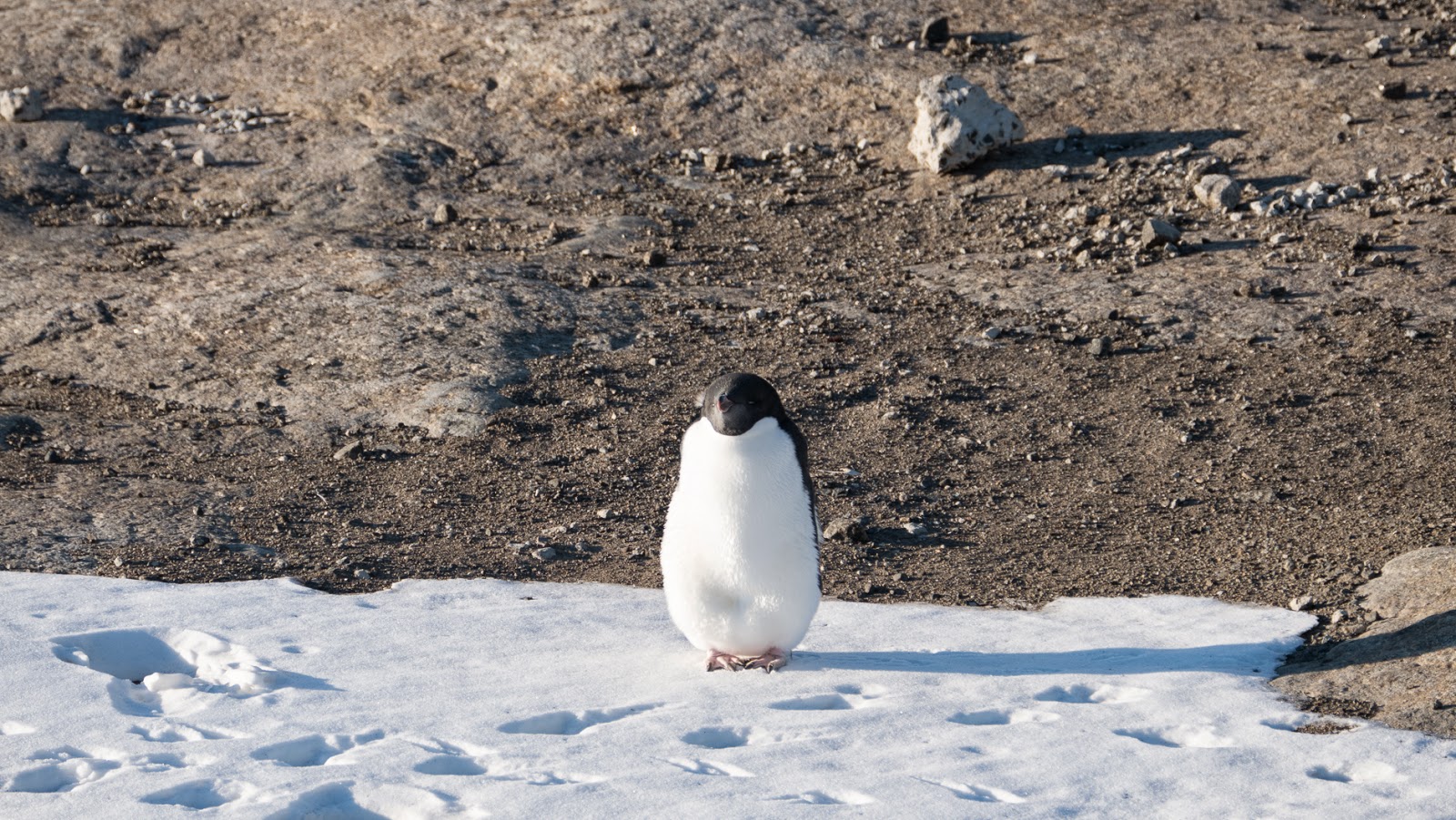
Adelie penguins and Weddell seals are the majority stakeholders around Mawson. There is an Adelie colony on Bechervaise Island, 2km off base, and the little guys hang around on the station rocks to molt at the end of summer. Every couple of days I would come across a grumpy little man standing on the road or hiding behind a rock, which is always exciting. And it doesn't matter how many times you see them, watching the little guys waddle around and rock-hop always elicits a giggle. 

The Weddells were planted in a small harbour downhill from station from the moment we arrived, which was incredibly exciting. They tend to simply not care about you, won't even watch you walk by - for the Weddells everything seems like simply too much work... but as with people, there are always the oddballs. One fellow dragged himself all the way over our hill one day, right through station and over the gravel. It was a very confusing experience for everyone watching, and looked genuinely unpleasant for him. He spent the night at the top of the hill right in the wind, but was gone again in the morning. 

I saw all of these critters - the seals, the penguins, the whales - for the first time while still aboard the Aurora Australis, before I had even seen Antarctica. Things slowed down for a couple of weeks after making landfall, and then I came across this big beasty who hung out for a couple of days, farting and sleeping his way through a molt.

Male Elephant seals can grow to a whopping 3000kg, but the repeat expeditioners opined that this boy was just a juvenile. Still, he was an incredible to behold, and watching him move was mind-blowing. Think two tonne caterpillar and you're getting close...

And finally, the last friend on my list of "hope to see" visited station last week. He chilled out for a few days, pretending to be short with the Adelies and just generally squawking around. 


The Emperors are the only locals who are hardy and foolish enough to spend the winter with us on the land. These crazy birds live up to 40 years, weigh up to 40kg, and breed during the freaking Antarctic winter. In preparation for breeding they can eat up to 6kg of sea a day, and then when the chick hatches it needs 42kg of food from each parent. How hardcore is that?! We will be visiting breeding colonies through the year to keep an eye on them and do a headcount. With any luck I'll be able to visit during the major stages of the season, and see the little fluffies grow up.

But sadder days lie ahead. Winter is closing in, the open water has disappeared, and all my local friends have left for their winter holidays. It's just us and the Emperor's down here now. 

Dramatic recreation of the orca I saw.
.

As a postscript, I was truly dumbfounded to come across plant life down here. I just really hadn't thought about it, but I have seen at least three distinct types of lichen spread among the rocks. It's so cold that it takes hundreds of years for them to grow to this size, so it's important to keep and eye on where you are stepping. 

Finally I had planned to sort these remaining photo's into species groups, but the internet is being a tad weak at the moment and I can't even load them anymore. I'm afraid that you will have to come up with your own witty captions this time.